p.41 抽出テキスト
AVNRT. Higher initial doses of adenosine are needed in children than in adults, with children receiving from 150 mcg/kg to 250 mcg/kg.413–415 Digoxin and propranolol have similar efficacy in infants with SVT without pre-excitation.416 Digoxin is avoided in the presence of pre-excitation because its use in infancy has been associated with SCD or ventricular fibrillation.417,418 Amiodarone, sotalol, propafenone, or flecainide can be used for refractory SVT in infants. In older children presenting with SVT, beta-blocker therapy is most often the initial therapy used. Because of the rare occurrence of adverse events with flecainide, including in patients without structural heart disease, ischemic heart disease, or ventricular dysfunction, flecainide is not used as a first-line medication in children.419

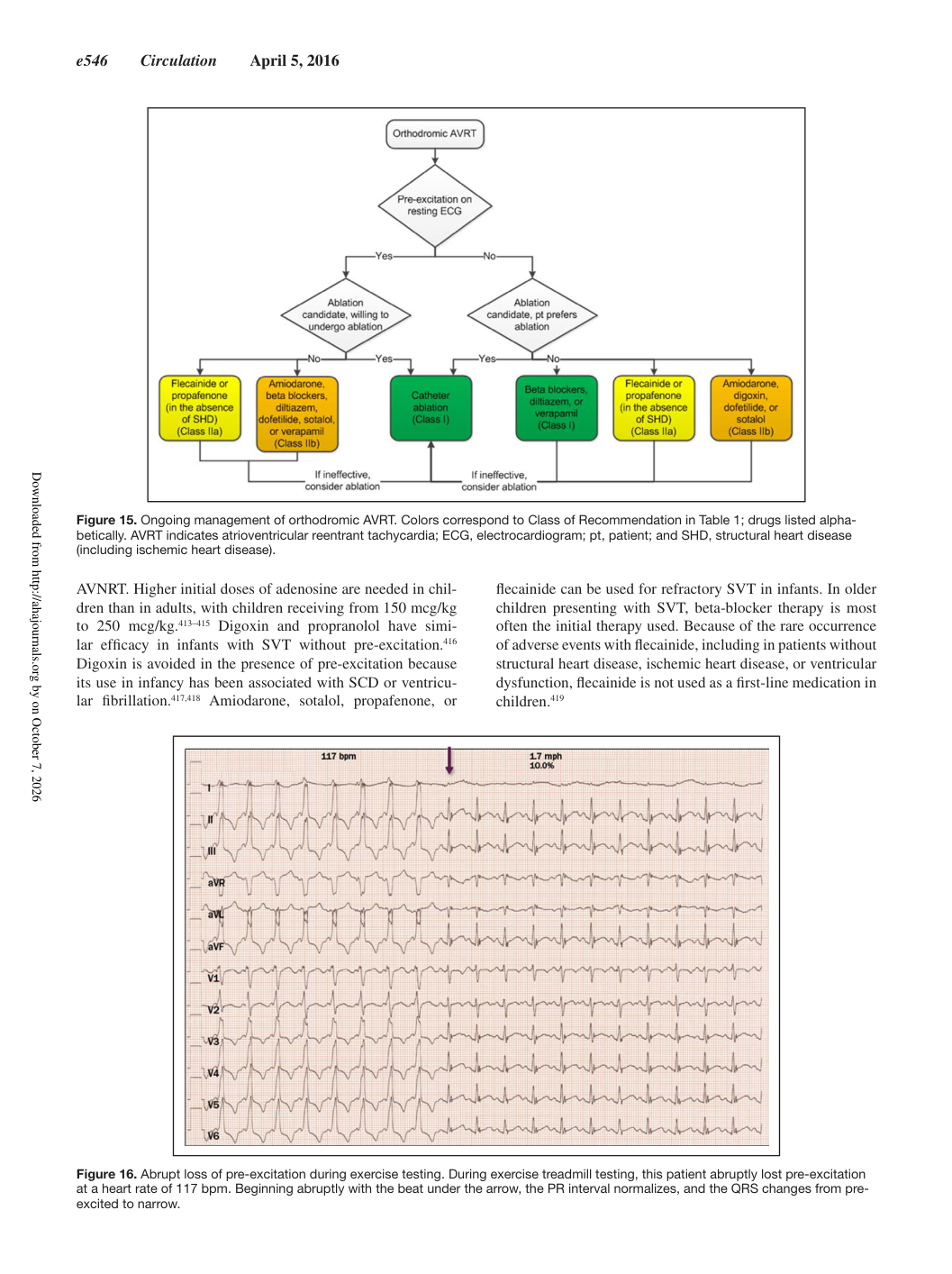
Figure 16. Abrupt loss of pre-excitation during exercise testing. During exercise treadmill testing, this patient abruptly lost pre-excitation at a heart rate of 117 bpm. Beginning abruptly with the beat under the arrow, the PR interval normalizes, and the QRS changes from preexcited to narrow.

Figure 15. Ongoing management of orthodromic AVRT. Colors correspond to Class of Recommendation in Table 1; drugs listed alphabetically. AVRT indicates atrioventricular reentrant tachycardia; ECG, electrocardiogram; pt, patient; and SHD, structural heart disease (including ischemic heart disease).

Downloaded from http://ahajournals.org by on October 7, 2026