p.17 抽出テキスト
of IST is difficult, and it should be recognized that lowering the heart rate may not alleviate symptoms. Therapy with beta blockers or calcium channel blockers is often ineffective or not well tolerated because of cardiovascular side effects, such as hypotension. Exercise training may be of benefit, but the benefit is unproven. Ivabradine is an inhibitor of the “I-funny” or “If” channel, which is responsible for normal automaticity of the sinus node; therefore, ivabradine reduces the sinus node pacemaker activity, which results in slowing of the heart rate. On the basis of the results of 2 large, randomized, placebo-controlled trials, this drug was recently approved by the FDA for use in patients with systolic heart failure. In the BEAUTIFUL (Morbidity-Mortality Evaluation of the If Inhibitor Ivabradine in Patients With Coronary Disease and Left-Ventricular Dysfunction) study,166 10 917 patients with coronary disease and a left ventricular ejection fraction <40% were randomized to ivabradine or placebo. In the SHIFT (Systolic Heart Failure Treatment With the If Inhibitor Ivabradine) trial,167 6558 patients with a left ventricular ejection fraction ≤35% were randomized to ivabradine or placebo. In both of these trials, therapy with ivabradine resulted in additional heart rate reductions of 6 to 8 bpm and proved to be generally safe. The drug has no other hemodynamic effects aside from lowering the heart rate. As such, it has been investigated for use to reduce the sinus rate and improve symptoms related to IST.168–176 Radiofrequency ablation to modify the sinus node can reduce the sinus rate, with acute procedural success rates reported in the range of 76% to 100% in nonrandomized cohorts.177–183 Ablation is typically performed with 3-dimensional electroanatomic or noncontact mapping techniques targeting sites of early activation with isoproterenol infusion, with or without use of intracardiac ultrasound–guided mapping to image the crista terminalis. Nonetheless, symptoms commonly recur after several months, with IST recurrence in up to 27% and overall symptomatic recurrence (IST or non- IST AT) in 45% of patients.177,179,180,182 Complications can be significant and may include symptomatic sinus or junctional bradycardia necessitating pacemaker placement, phrenic nerve injury with paralysis of the right hemidiaphragm, and significant facial and upper-extremity swelling caused by narrowing of the superior vena cava/RA junction, which may rarely result in superior vena cava syndrome. In view of the modest benefit of this procedure and its potential for significant harm, sinus node modification should be considered only for patients who are highly symptomatic and cannot be adequately treated by medication, and then only after informing the patient that the risks may outweigh the benefits of ablation. Even more aggressive surgical methods to ablate or denervate the sinus node have been described, further highlighting the risks that highly symptomatic patients are willing to accept to find relief.184 Effective patient communication is key for these patients.

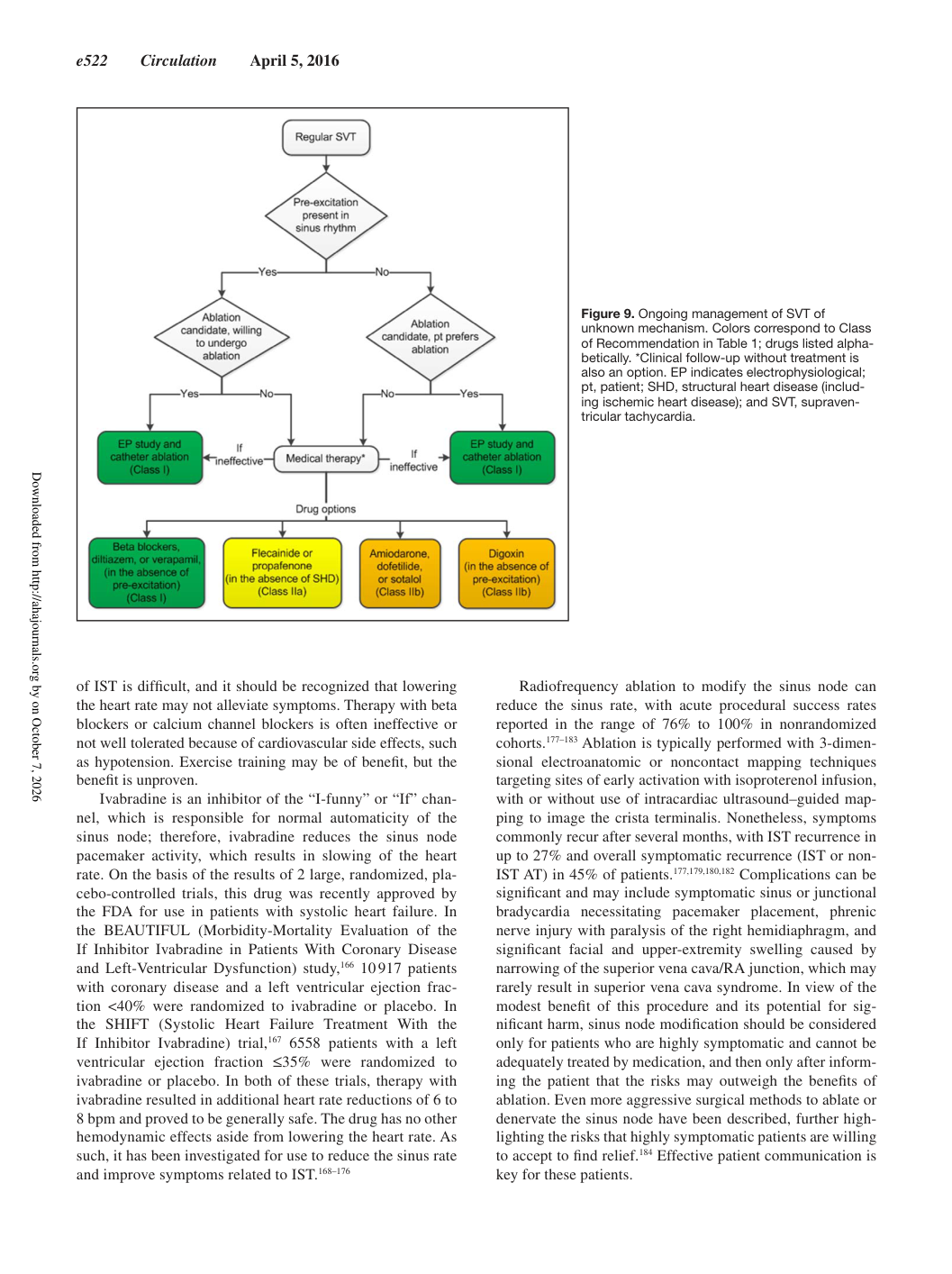
Figure 9. Ongoing management of SVT of unknown mechanism. Colors correspond to Class of Recommendation in Table 1; drugs listed alphabetically. *Clinical follow-up without treatment is also an option. EP indicates electrophysiological; pt, patient; SHD, structural heart disease (including ischemic heart disease); and SVT, supraventricular tachycardia.

Downloaded from http://ahajournals.org by on October 7, 2026