p.16 抽出テキスト
3.1 Physiological Sinus Tachycardia

Sinus tachycardia is regarded as physiological when it is the result of appropriate autonomic influences, such as in the setting of physical activity or emotional responses. Physiological sinus tachycardia may result from pathological causes, including infection with fever, dehydration, anemia, heart failure, and hyperthyroidism, in addition to exogenous substances, including caffeine, drugs with a beta-agonist effect (eg, albuterol, salmeterol), and illicit stimulant drugs (eg, amphetamines, cocaine). In these cases, tachycardia is expected to resolve with correction of the underlying cause.

3.2 Inappropriate Sinus Tachycardia

Inappropriate sinus tachycardia (IST) is defined as sinus tachycardia that is unexplained by physiological demands at rest, with minimal exertion, or during recovery from exercise. Crucial to this definition is the presence of associated, sometimes debilitating, symptoms that include weakness, fatigue, lightheadedness, and uncomfortable sensations, such as heart racing. Patients with IST commonly show resting heart rates >100 bpm and average rates that are >90 bpm in a 24-hour period.160 The cause of IST is unclear, and mechanisms related to dysautonomia, neurohormonal dysregulation, and intrinsic sinus node hyperactivity have been proposed.

It is important to distinguish IST from secondary causes of tachycardia, including hyperthyroidism, anemia, dehydration, pain, and use of exogenous substances and drugs of abuse. Anxiety is also an important trigger, and patients with IST may have associated anxiety disorders.160 Structural heart disease, such as cardiomyopathies, must also be excluded, though the development of a cardiomyopathy secondary to sinus tachycardia is extremely rare.164,165 IST must also be distinguished from other forms of tachycardia, including AT arising from the superior aspect of the crista terminalis and sinus node reentrant tachycardia (Section 4). It is also important to distinguish IST from postural orthostatic tachycardia syndrome, although overlap may be present within an individual. Patients with postural orthostatic tachycardia syndrome have predominant symptoms related to a change in posture, and treatment to suppress the sinus rate may lead to severe orthostatic hypotension. Thus, IST is a diagnosis of exclusion.

3.2.1 Acute Treatment

There are no specific recommendations for acute treatment of IST.

3.2.2 Ongoing Management: Recommendations

Because the prognosis of IST is generally benign, treatment is for symptom reduction and may not be necessary. Treatment

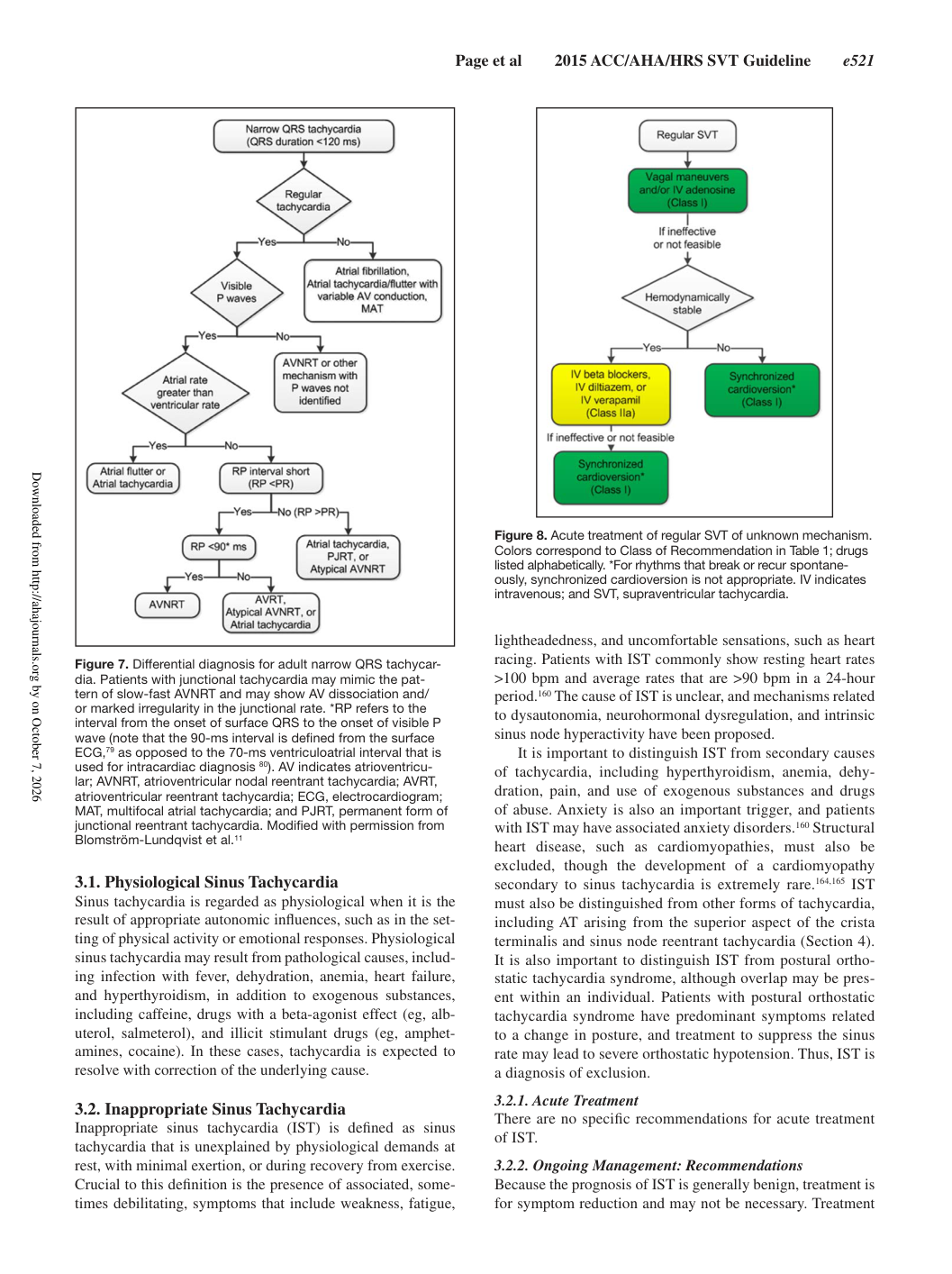
Figure 7. Differential diagnosis for adult narrow QRS tachycardia. Patients with junctional tachycardia may mimic the pattern of slow-fast AVNRT and may show AV dissociation and/ or marked irregularity in the junctional rate. *RP refers to the interval from the onset of surface QRS to the onset of visible P wave (note that the 90-ms interval is defined from the surface ECG,79 as opposed to the 70-ms ventriculoatrial interval that is used for intracardiac diagnosis 80). AV indicates atrioventricular; AVNRT, atrioventricular nodal reentrant tachycardia; AVRT, atrioventricular reentrant tachycardia; ECG, electrocardiogram; MAT, multifocal atrial tachycardia; and PJRT, permanent form of junctional reentrant tachycardia. Modified with permission from Blomström-Lundqvist et al.11 Figure 8. Acute treatment of regular SVT of unknown mechanism. Colors correspond to Class of Recommendation in Table 1; drugs listed alphabetically. *For rhythms that break or recur spontaneously, synchronized cardioversion is not appropriate. IV indicates intravenous; and SVT, supraventricular tachycardia.

Downloaded from http://ahajournals.org by on October 7, 2026